
Many analysts, including myself, have repeatedly written about us having entered a new normal, which is enforced by a so-called green swan event – an event that according to BIS is “extremely disruptive and that could be behind a systemic crisis” (brackets set by Thomas Wieberneit). Supply chains are broken, employees need to work from home, stores were forced to close for prolonged times, and so on. This has the potential to seriously harm the base function of a business, which is helping their customers solve their problems. Looking at the pyramid of customer expectations, businesses are often barely, if at all, able to maintain its lowest level – the level of effectivity – and are far away from making it easy for their customers or even providing them with a joyful experience when interacting and engaging with them. 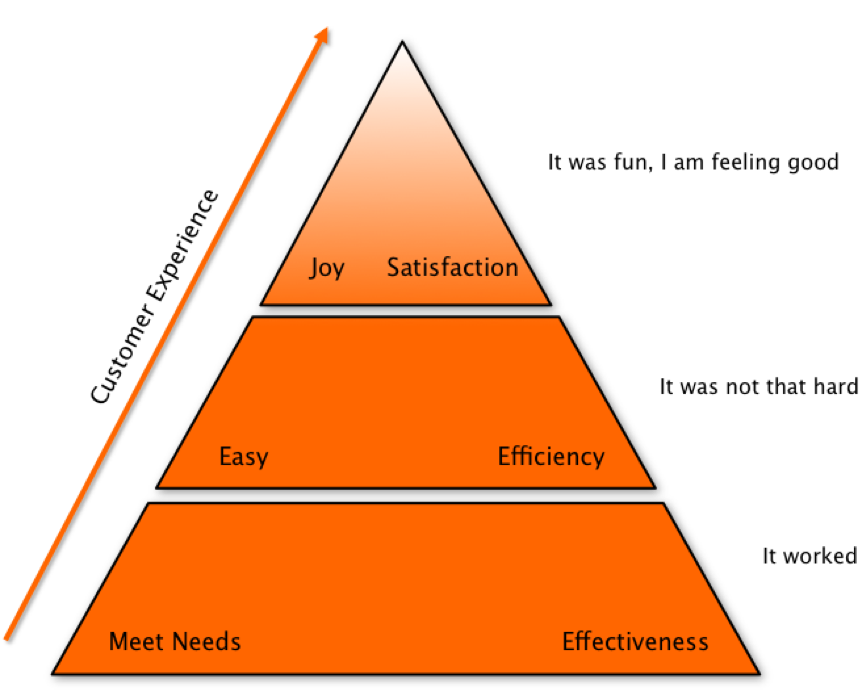 Figure 1: The hierarchy of customer expectations Yet, we are in an era where products and services themselves get increasingly deprecated and the experience becomes the main distinguishing factor for continued success. Still not all organizations are set up to deal with this. Most are not resilient enough to fend off or at least mitigate the disruption caused by a crisis. Some organizations are affected more than others. So are the people who work in these organizations.
 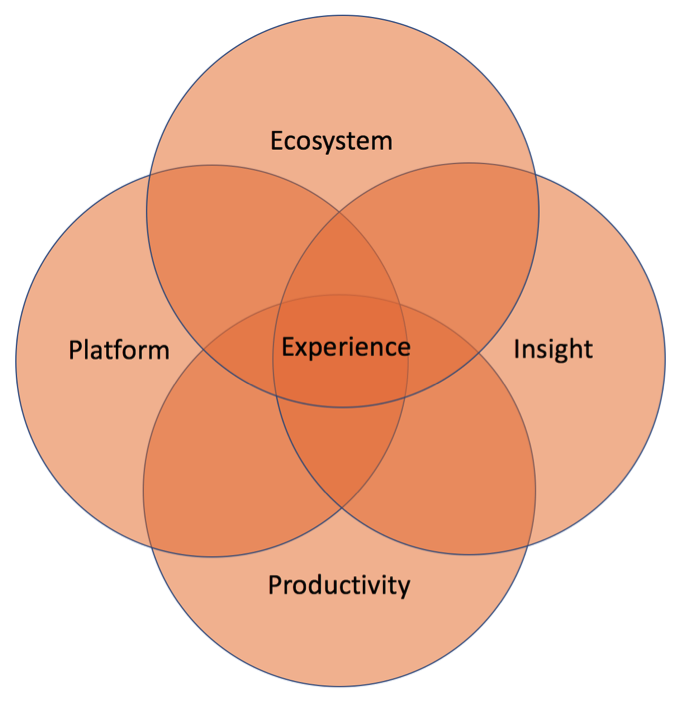 Figure 2: The building blocks of a customer experience platform This platform provides four elements:
Figure 1: The hierarchy of customer expectations Yet, we are in an era where products and services themselves get increasingly deprecated and the experience becomes the main distinguishing factor for continued success. Still not all organizations are set up to deal with this. Most are not resilient enough to fend off or at least mitigate the disruption caused by a crisis. Some organizations are affected more than others. So are the people who work in these organizations. - Salespeople cannot interact with their customers in the ‘usual’ way anymore. They cannot go out and visit them currently.
- Customer service professionals need to change their ways of collaboration with their colleagues, they cannot just ask their neighbour anymore.
- Marketing Teams cannot create and host offline events due to distance and meeting restrictions.
- Finance departments see challenges in creating invoices in time due to inaccessibility of information, advice, data and documents.
- Bonding between colleagues works different now, as there is no coffee corner anymore – nor the common smoke. Social interactions work differently now.
- Stores can only serve a very limited number of customers, if at all, again, due to distance and meeting restrictions.
- People cannot interact with each other as they are used to.
- Processes, that rely on siloed best of breed implementations, break down.
Figure 2: The building blocks of a customer experience platform This platform provides four elements: - A strong technology platform that holds and exposes the main capabilities that all enterprise software needs in order to be able to create a great experience: Analytics, integration, machine learning/AI, IoT services, blockchain, database access, security, no-code/low-code development services, to name just a few of the more important ones. The ability of organizations to innovate and while maintaining a stable core is depends on this.
- Insight, i.e. actionable information with the objective of achieving an outcome. Insight is what enables companies or individuals to turn raw data into actions that yield positive results for customers and therefore for themselves. This data may be structured or unstructured, transactional or behavioural, etc. Data may be first party, second party, or third party data. Through the use of analytics, data can be turned into information and through the use of advanced analytics and AI into insight. The services to enable this are delivered via the technology platform.
- Productivity is about the effective and efficient process automation, where possible combined with an efficient way for people to get their jobs done. Especially within a business, but also across businesses, people need to collaborate easily and efficiently. This requires a lot of tools, services, and a strong data sharing ability. It also requires people to interact with computers not in the computer way but the same way people interact. This is one of the main reasons for the rise of speech and voice interfaces. Efficient collaboration, based upon insight, is not only necessary for people, but for interacting software systems as well; it is crucial for an effective process automation.
- And finally, an ecosystem of customers and partners, that enables scale. This scale is achieved by building and nurturing an ecosystem of partners. Partners are developing solutions that augment the core ones; other partners implement solutions across the ecosystem. To be accepted, it needs to distribute the value it generates fair and transparent to all involved parties.